


The 108 m (356 ft) lengthy Radia Windrunner is designed to move cargo too giant for roads to brief, prepared runways over tough terrain. That would dwarf the majestic 84 m (275 ft) lengthy Antonov An-225 Mrya. Unfortunately, it not exists.
With the exception of the Large Hadron Collider, no machine in historical past has had a single half bigger than at this time’s big wind generators. For instance, some offshore generators are constructed with blades over 140 m (459 ft) lengthy. One of the explanations you’ll be able to’t attain this scale on dry land is that it is practically unattainable to maneuver a blade of this dimension on a highway.
The corners are too tight. The bridge is just too low. Even a blade half that dimension is a logistical nightmare. And as you’ll be able to see within the video beneath, the method will be fairly scary to look at. There needs to be no large gusts of wind that day!
A truck carrying big wind turbine blades navigates a treacherous mountain highway
The thought of Radia Windrunner is subsequently a transportation answer that may design all the turbine manufacturing operation, and is, in actual fact, an answer that wind farms must issue into their plans from day one. This is as a result of it’s fully centered on transferring completely gigantic turbine blades.
we’re radia
If it had been six ft longer, the Windrunner would stretch all the size of an NFL soccer subject, and with a wingspan of 80 meters (261 ft), it might even be virtually three-quarters as huge. At 24 m (79 ft) tall, it isn’t taller than the Airbus A380, however its flip-top entrance and raised cabin above the fuselage permit the 108 m (354 ft) lengthy airplane to hold cargo. I can. It will be as much as 105 m (344 ft) lengthy and seven.3 m (24 ft) in diameter.
It has a most payload of a whopping 72,575 kg (160,000 lb), a most vary of roughly 2,000 km (1,200 miles), and a cargo compartment quantity of roughly 8,200 cubic meters (272,000 cubic ft), greater than seven occasions greater than its predecessor. The mighty Antonov will have the ability to present. It might be fairly giant.
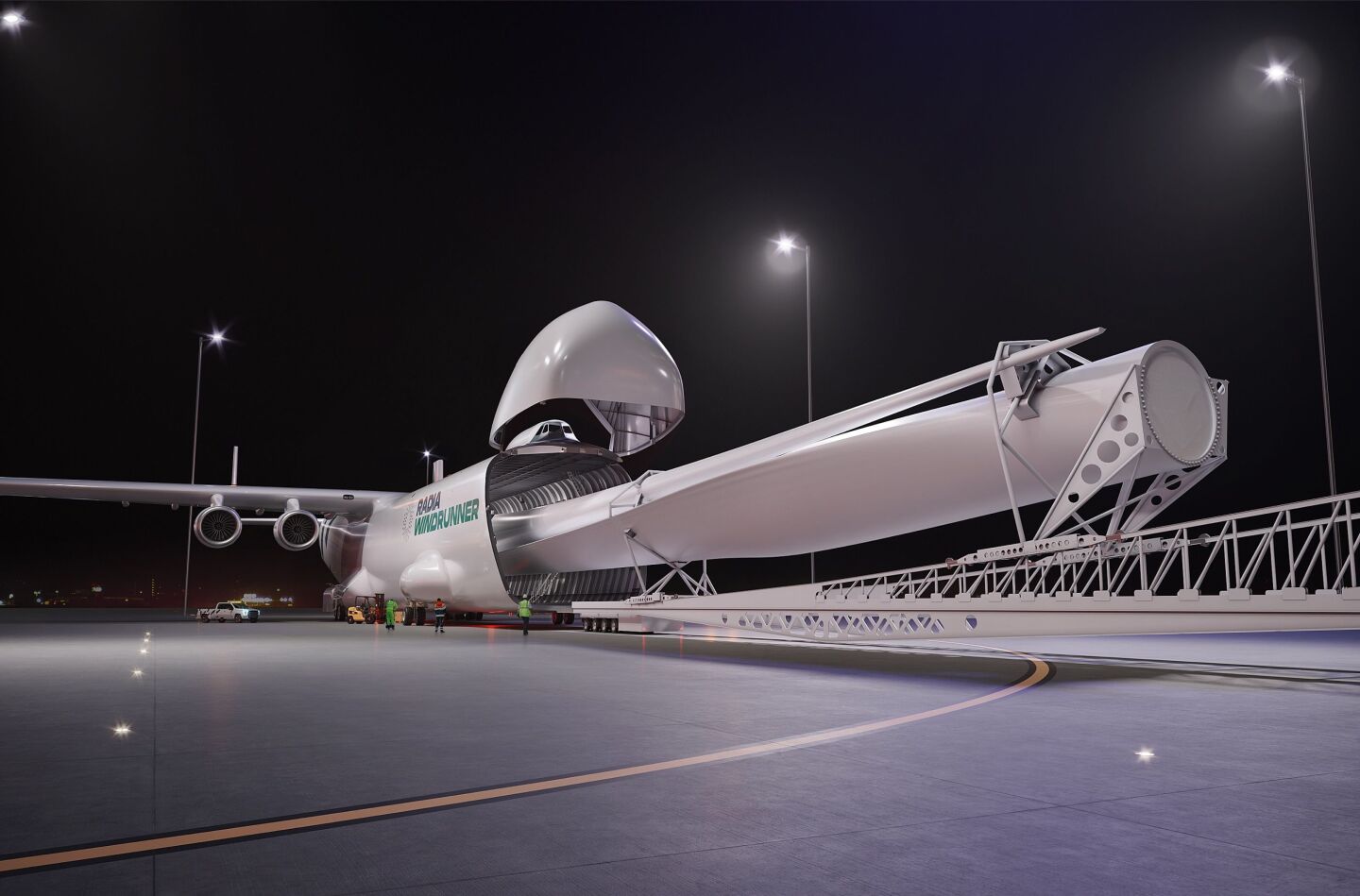
Flip-top fuselage permits virtually all the size of the plane to be opened for loading giant quantities of cargo
Radia
The thought is to put in a runway as shut as potential to the blade manufacturing facility and one other one very near the wind farm. The blades are loaded immediately onto the airplane from the manufacturing unit ground and equally lifted by crane virtually straight from the again of the airplane for set up.
To facilitate one of these motion, the Windrunner is designed to take off and land on a comparatively brief 1,800 m (6,000 ft) runway. To put this into perspective, typical a lot smaller airliners sometimes use strips which can be 30-110% longer than that.
Additionally, Radia would not even rely on a correct paved runway. Anticipating that many wind farms are constructed on open, flat land, Windrunner is a “semi-prepared runway,” a easy space cleared of rocks, brush, bushes, and different obstacles. is designed to function in , like a army airplane touchdown throughout an operation.
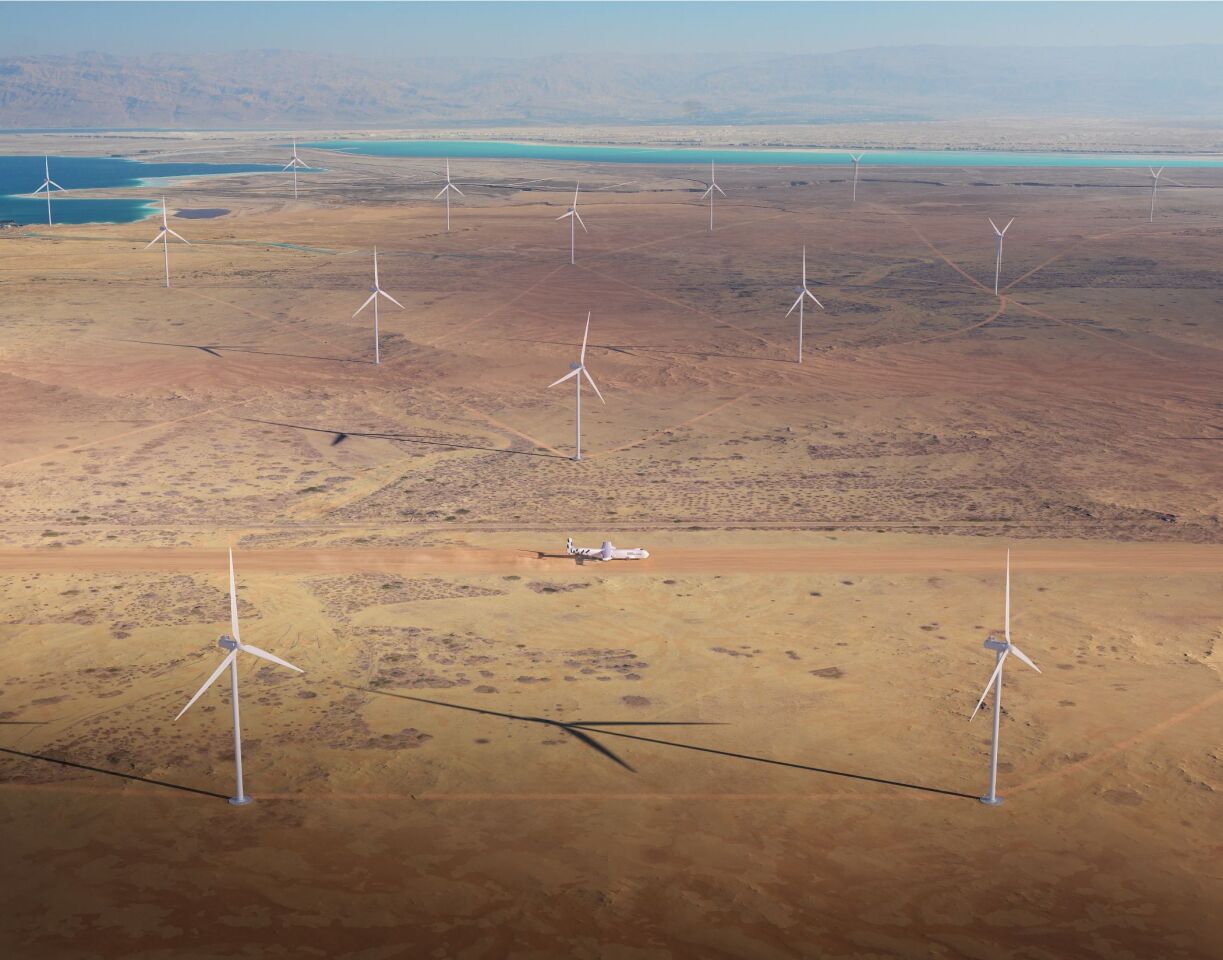
Windrunner allows a lot bigger wind generators for use on land, doubtlessly radically lowering the price of wind power.
Radia
According to the Wall Street Journal, Windrunner is greater than only a collection of renderings – Radia has apparently raised $104 million for this objective, and the corporate is an onshore wind energy developer. We estimate that bigger generators can save as a lot as 35% in clear power, making wind farms viable in a wider vary of areas. The firm apparently believes Windrunner might be manufactured, examined and licensed inside about 4 years.
It’s definitely a noteworthy undertaking, and if it takes flight, it may open up all kinds of alternatives for clear power builders. We sit up for the evolution of this monster machine!
Source: Radia