


Introduction
Solid waste that’s not correctly collected and disposed generally is a breeding floor for bugs, vermin, and scavenging animals that will lead to air- and water-borne illnesses (Hoornweg and Bhada-Tata, 2012). For instance, surveys performed by UN-Habitat present that in areas the place waste shouldn’t be collected continuously, the incidence of diarrhea is twice as excessive and acute respiratory infections six instances increased than in areas the place assortment is frequent (UN-HABITAT, 2010). Additionally, poorly managed waste has unfavourable impacts on fragile terrestrial, coastal and marine ecosystems, tourism (Hoornweg and Bhada-Tata, 2012) and greenhouse gasoline (GHG) emissions (Chen and Lo, 2016). Post-consumer waste is estimated to account for almost 5% of complete GHG emissions (Wilson et al., 2015).
The correct administration of MSW in developed nations (e.g., United States, Germany, Japan) has been on account of a transfer from a landfill-based waste administration system to a extra built-in one, which is taken into account to be the important thing in the direction of a profitable remedy of MSW (Zhuang et al., 2008; Memon, 2010). Waste separation is a crucial part of a profitable built-in waste administration system (Adeniran et al., 2017), as a result of it will increase the standard of the produced compost and recyclables, and optimizes incineration. Additionally, it permits higher financing of waste administration actions and minimizes the power and labor inputs to any downstream processes (Zhuang et al., 2008) and likewise, it may be used within the tire trade (Fathollahi-Fard et al., 2021), lighting trade (Mirzagoltabar et al., 2021), and walnut trade (Salehi-Amiri et al., 2021) by closed-loop provide chain community. The closed-loop provide chains effectivity is improved by pricing and promoting choices, strict environmental and social legislations (Asghari et al., 2022) and particularly, is affected by through the COVID-19 pandemic (Moosavi et al., 2022).
Previous research counsel that a number of components, particularly, pro-environmental perspective, alternative price, recycling data, and social norms could also be efficient in recycling/supply separation actions (Matsumoto, 2014; Arkorful et al., 2022), subjective norms, ethical norms, comfort, and the associated fee to recycle (Juliana et al., 2022), monetary incentives and frequency of waste assortment (Grodzińska-Jurczak et al., 2006; Castagna et al., 2013). The outcomes of the examine demonstrated that attitudes, subjective norms, and perceived behavioral management affected the intention of millennial shoppers to lower using plastic ingesting bottles (Raimondo et al., 2022). An Italian examine concluded that waste administration course of is optimized when each residents and native authorities behave appropriately (Agovino et al., 2018). Some experiences counsel that efficient insurance policies within the subject of waste administration are instrumental in positively affecting family recycling behaviors (Lee and Jung, 2017; Morlok et al., 2017; Andersson and Stage, 2018). For instance, it’s reported that amassing meals waste individually is simpler than imposing weight-based tariffs to cut back the waste destined for incineration (Andersson and Stage, 2018).
Theory of Planned Behavior (TPB) is a continuously used framework for figuring out behaviors. The TPB was offered by Fishbein and Ajzen (1980) and has been also used within the prediction of health-related behaviors and the design of habits change interventions (Taghdisi et al., 2016; Babazadeh et al., 2017). In the examine performed in Italy in 2022, the Theory of Planned Behavior (TPB) was profitable in predicting habits relating to decreased plastic ingesting bottle consumption (Raimondo et al., 2022). In the examine by Wang et al. (2021), environmental regulation performed a very powerful position on behavioral intention for family waste sorting and habits affected by intention and perceived habits management for family waste sorting. A examine performed in Thailand revealed data and subjective norm had been two essential determinants of the respondents’ intention that had a powerful affect on family waste separation habits (Pongpunpurt et al., 2022). A examine by Bardus and Massoud (2022) confirmed perceived behavioral management, perceived norms, and present habits had been the strongest predictors of intention towards separating waste. The analysis of the examine performed using TPB in Shanghai (2022) demonstrated that perspective, subjective norms, and perceived behavioral management had been considerably related to residents’ waste sorting intention and proved sorting habits was affected by sorting intention (Govindan et al., 2022). The outcomes of one other examine revealed subjective norms and environmental attitudes had been considerably related to pro-environmental intention. Also, pro-environmental intention and perceived behavioral management had been associated to pro-environmental behaviors (Karimi et al., 2022). Hence, the examine outcomes may help policymakers and stockholders when it comes to formulating legal guidelines and laws to boost waste separation habits and recycling plans in a neighborhood.
Despite its success in investigating the determinants of assorted sorts of habits, the standard TPB framework was argued to be essential for the extra explaining complicated habits, similar to stable waste supply separation, and that further variables must be included (Ajzen, 1991; Davies et al., 2002). Consequently, in our examine, we added ethical obligation and effectiveness to the mannequin. The perceived ethical dedication is outlined as a person’s judgment of ethical correctness of performing a particular habits and was included within the TPB to enhance predictive validity (Ajzen, 1991) and clarify waste separation behaviors (Pakpour et al., 2014; Xu et al., 2017). The objective of the examine was to look at the determinants of Source Separation of Waste (SSW), using the modified TPB mannequin.
Methods
Setting
The examine was performed in Tabriz (capital of East Azerbaijan Province, Iran). The temperature usually ranges from 6.8 to fifteen.7°C, annual precipitation is roughly 250–300 mm, and the inhabitants, as of 2016, was 1,773,033 (Cencus, 2016). 1,200 tonnes of rubbish per individual are produced in Tabriz, Iran, in keeping with a examine by Zazouli et al. (2012). The most typical constituents of this waste are natural supplies (58.5%) and recyclable supplies (together with paper, plastic, metals, and glass) (26.2%). They got here to the conclusion that round 85% of Tabriz’s waste might be recycled, which might considerably decrease environmental air pollution (Zazouli et al., 2012).
Study design and knowledge assortment
Instrumentation
A) Socio-demographic Variables: Data on age, gender, marital standing, schooling, revenue, and occupational standing had been collected to explain the pattern
B) TPB Measures: The TPB constructs had been displayed in Table 1.
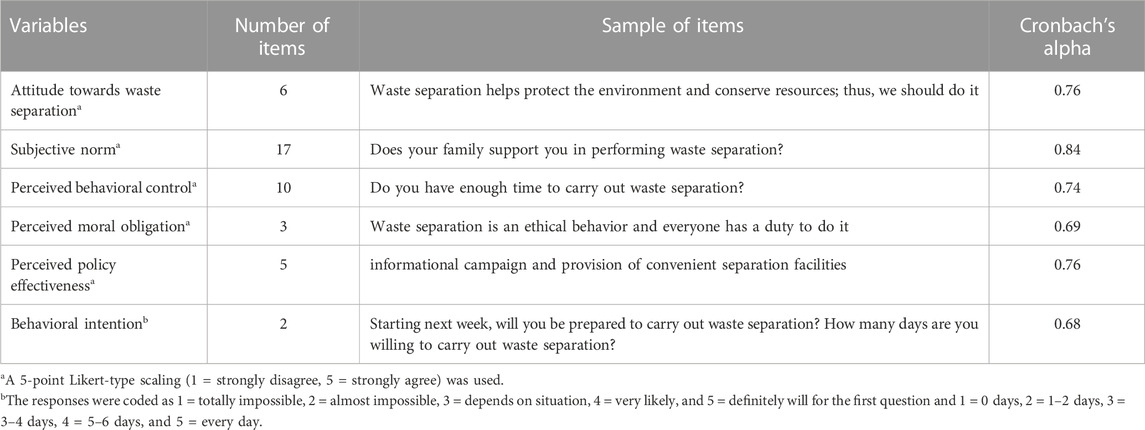
TABLE 1. Details of the employed TPB questionnaire.
C) Waste separation habits, the end result measure, was assessed by acquiring knowledge on how typically 9 numerous wastes (i.e., paper, glass, kitchen waste, battery, discarded plastic bottles, cans, metallic objects, renewable plastics, and cloths) had been separated through the earlier 12 months. The responses had been coded as 1 = by no means, 2 = seldom, 3 = sometimes, 4 = recurrently, and 5 = all the time. Cronbach’s Alpha for this scale was 0.90.
The sum of the responses to the gadgets in every assemble was used to compute the dimensions rating. Higher the rating, increased the habits.
Data evaluation
Ethical concerns
The examine obtained moral approval from the Tabriz University of Medical Sciences Ethics Committee (Ethical Code/Number, IR. TBZMED.REC. 1,395.864).
Results
The majority of the 360 individuals had been lower than 29 years outdated (56.60%), male (55.80%), self-employed (61.40%), and bachelor’s diploma was the mode for his or her highest degree of schooling (46.40%). Age-group and gender variations primarily based on the end result measure of waste separation habits had been statistically important (See Table 2).
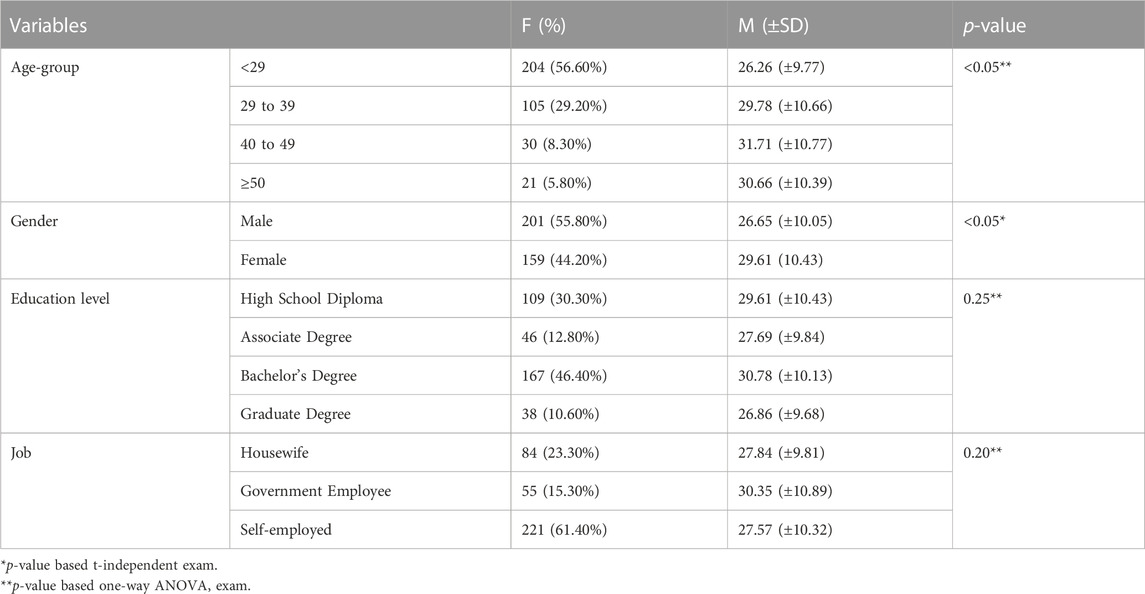
TABLE 2. Means and normal deviations by chosen demographic traits for waste separation habits.
A collection of Pearson Product-Moment Correlation Coefficient was carried out. As might be seen in Table 3, all bivariate associations among the many TPB variables in addition to the associations between them and the end result measure of waste separation habits had been statistically important on the 0.05 degree.
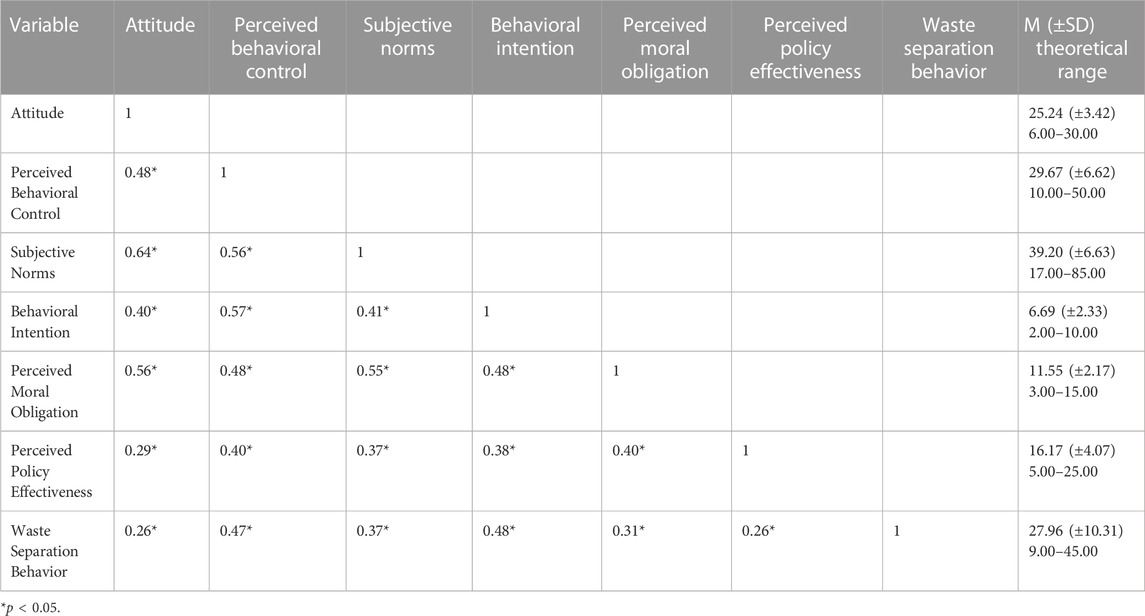
TABLE 3. Correlation matrix for all examine variables.
The outcomes of the structural mannequin and match indices, X2 = 3.18, df = 2, X2/df = 1.59, N = 360, RMSEA = 0.00, CFI = 0.99, TLI = 0.96, SRMR = 0.01, RSMEA = 0.04, CI: 0.00 to 0.12, confirmed a passable match. The most essential determinants of behavioral intention had been perceived behavioral management (β = 0.39, p < 0.05), ethical commitments (β = 0.19, p < 0.05), and perceived coverage effectiveness (β = 0.12, p < 0.05), suggesting that behavioral intention is elevated by increased perceived behavioral management, ethical commitments, and perceived coverage effectiveness. The strongest determinants of waste separation habits had been behavioral intention (β = 0.29, p < 0.05) and perceived behavioral management (β = 0.25, p < 0.05); that’s, the end result is elevated by behavioral intention and perceived behavioral management. The mannequin is depicted in Figure 1.
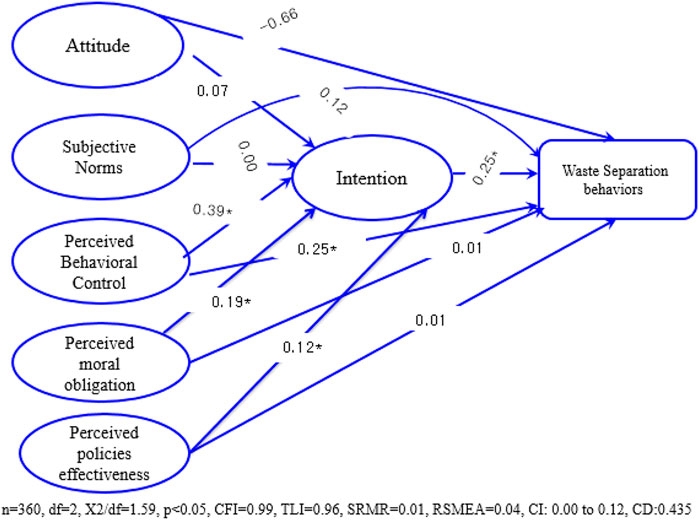
FIGURE 1. Cognitive predictors of waste separation habits.
Discussion
The outcomes of this examine confirmed that behavioral intention has been most essential within the predicting of waste separation habits. Xu et al. (2017), of their Chinese examine, additionally discovered robust intention was related to this habits. In different research, Wang et al. (2021) in China, discovered habits affected by intention and perceived habits management for family waste sorting and Pongpunpurt et al. (2022) in Thailand, revealed data and subjective norm had been two essential determinants of the respondents’ intention that had a powerful affect on family waste separation habits. In one other examine, Zhang et al. (2015) in China indicated that waste separation behavioral intentions had a major constructive affect on waste separation habits. These findings point out that elevated intention of waste separation habits can considerably enhance the habits. In this examine, it was discovered that perceived behavioral management was the strongest determinant of behavioral intention, positively affecting the end result, which is according to earlier research (Arı and Yılmaz, 2016; Wan et al., 2017; Bardus and Massoud, 2022; Govindan et al., 2022). The findings replicate that residents’ behavioral intentions had been largely depending on their self-control skills. Furthermore, subjective norms weren’t related to the intention of waste separation at supply, which was in step with the outcomes of examine performed by Agovino et al. (2018), though reverse conclusions had been additionally obtained on recycling behaviors in Hong Kong (Wan et al., 2014a), in Italy (Raimondo et al., 2022) and Iran (Pakpour et al., 2014). This could also be as a result of waste source-separated assortment has not been sufficiently established in Tabriz to supply robust norms in order that the respondents didn’t assume they had been underneath important social stress for his or her waste separation behaviors.
Ajzen (1991) had instructed the addition of ethical obligations or norms to the TPB mannequin to enhance its predictive validity, which we did and located it to be an essential determinant of people’ separation intention. This discovering is according to earlier research (Zhang et al., 2015; Xu et al., 2017), suggesting that methods geared toward emphasizing people’ ethical motivations are essential in selling family waste separation behaviors. Cultivating residents’ duty to guard the surroundings and promote conventional virtues have the potential to be efficient.
Similar to our findings, one other examine additionally confirmed perceived environmental insurance policies could possibly be helpful in selling supply separation behaviors (Steg and Vlek, 2009). Wan et al. (2014b) instructed a framework that mixed the TPB and the Norm Activation Model (NAM) to find out recycling behaviors, using coverage effectiveness as a moderating issue, which had a unfavourable position between topic norm and recycling intention. We additionally discovered no relation between perceived coverage effectiveness and waste separation behaviors; nonetheless, it was correlated with the moderating issue of intention.
To higher perceive the outcomes, we examined the waste separation habits in relation to a couple chosen demographic variables and located variations on account of age and gender. Specifically, older folks in our examine had been extra seemingly to participate in waste separation, which can be supported by Pakpour et al. (2014) in Iran and Pearson et al. (2012) in Texas, as a result of they might have the free time to are inclined to the duty or dedicated to preserve assets for future generations. Similar to a different examine (Davies et al., 2002), the prevalence of the habits amongst ladies in our examine was had been extra in comparison with males, suggesting that particular academic supplies must be developed to encourage them to actively take part in family waste separation actions.
Conclusion
We investigated components that will affect Tabriz residents’ supply separation intention and behaviors for bettering recycling system by extending the Theory of Planned Behavior to incorporate perceived ethical obligation and effectiveness insurance policies. We discovered city residents’ supply separation intentions had been positively influenced by increased perceived behavioral management, ethical commitments, and perceived insurance policies effectiveness, whereas constructs of intention and perceived behavioral management had been helpful in predicting waste separation behaviors. These findings present wants of the long run analysis that efficient insurance policies and techniques must be developed and applied to encourage involved people to actively take part in waste separation by selling environmental consciousness messaging, informing them of ethical obligations, and specializing in creating a way of duty for environmental safety. There had been some limitations on this examine. First, as knowledge assortment methodology within the current examine was primarily based on self-report by residents, recall bias is warranted. The second limitation is that the generalizability of the findings is restricted to Tabriz metropolis. As properly as, as a limitation for the current examine, we solely used one methodology for knowledge assortment. This implies that no different complementary methodology was used to verify the findings. Having a combined method to triangulate the quantitative findings with qualitative ones might have supplied us with a excessive degree of inside validity. Using totally different strategies in knowledge assortment might assist the crew of analysis in checking the reliability and validity of the information.
Data availability assertion
Ethics assertion
The research involving human individuals had been reviewed and accepted by Ethics Committee in Tabriz University of Medical Sciences. The sufferers/individuals supplied their written knowledgeable consent to take part on this examine.
Author contributions
Conflict of curiosity
Publisher’s observe
References
Adeniran, A., Nubi, A., and Adelopo, A. (2017). Solid waste era and characterization within the University of Lagos for a sustainable waste administration. Waste Manag. 67, 3–10. doi:10.1016/j.wasman.2017.05.002
PubMed Abstract | CrossRef Full Text | Google Scholar
Agovino, M., D’Uva, M., Garofalo, A., and Marchesano, Ok. (2018). Waste administration efficiency in Italian provinces: Efficiency and spatial results of native governments and citizen motion. Ecol. Indic. 89, 680–695. doi:10.1016/j.ecolind.2018.02.045
CrossRef Full Text | Google Scholar
Ajzen, I. (1991). The idea of deliberate habits. Organ. Behav. Hum. Decis. Process. 50 (2), 179–211. doi:10.1016/0749-5978(91)90020-t
CrossRef Full Text | Google Scholar
Akhtar, S., Ahmad, A., Qureshi, M., and Shahraz, S. (2017). Households willingness to pay for improved stable waste administration. Glob. J. Environ. Sci. Manag. 3 (2), 143–152. doi:10.22034/gjesm.2017.03.02.003
CrossRef Full Text | Google Scholar
Andersson, C., and Stage, J. (2018). Direct and oblique results of waste administration insurance policies on family waste behaviour: The case of Sweden. Waste Manag. 76, 19–27. doi:10.1016/j.wasman.2018.03.038
PubMed Abstract | CrossRef Full Text | Google Scholar
Arı, E., and Yılmaz, V. (2016). A proposed structural mannequin for housewives’ recycling habits: A case examine from Turkey. Ecol. Econ. 129, 132–142. doi:10.1016/j.ecolecon.2016.06.002
CrossRef Full Text | Google Scholar
Arkorful, V. E., Shuliang, Z., and Lugu, B. Ok. (2022). Investigating family waste separation habits: The salience of an built-in norm activation mannequin and the idea of deliberate habits. J. Environ. Plan. Manag. 27, 1. doi:10.1080/09640568.2022.2063112
CrossRef Full Text | Google Scholar
Asghari, M., Afshari, H., Mirzapour Al-e-hashem, S., Fathollahi-Fard, A. M., and Dulebenets, M. A. (2022). Pricing and promoting choices in a direct-sales closed-loop provide chain. Comput. Industrial Eng. 171, 108439. doi:10.1016/j.cie.2022.108439
CrossRef Full Text | Google Scholar
Babaei, A. A., Alavi, N., Goudarzi, G., Teymouri, P., Ahmadi, Ok., and Rafiee, M. (2015). Household recycling data, attitudes and practices in the direction of stable waste administration. Resour. Conservation Recycl. 102, 94–100. doi:10.1016/j.resconrec.2015.06.014
CrossRef Full Text | Google Scholar
Babazadeh, T., Nadrian, H., Banayejeddi, M., and Rezapour, B. (2017). Determinants of pores and skin most cancers preventive behaviors amongst rural farmers in Iran: An software of safety motivation idea. J. Cancer Educ. 32 (3), 604–612. doi:10.1007/s13187-016-1004-7
PubMed Abstract | CrossRef Full Text | Google Scholar
Babazadeh, T., Nadrian, H., Mosaferi, M., and Allahverdipour, H. (2018). Challenges in family stable waste separation plan (HSWSP) at supply: A qualitative examine in Iran. Envr. Dev. Sustain. 22, 1–16. doi:10.1007/s10668-018-0225-9
CrossRef Full Text | Google Scholar
Babazadeh, T., Nadrian, H., Mosaferi, M., and Allahverdipour, H. (2018). Identifying challenges and boundaries to collaborating within the supply separation of waste program in Tabriz, northwest of Iran: A qualitative examine from the residents’ perspective. Resources 7 (3), 53. doi:10.3390/resources7030053
CrossRef Full Text | Google Scholar
Bardus, M., and Massoud, M. A. (2022). Predicting the intention to kind waste at residence in rural communities in Lebanon: An software of the idea of deliberate behaviour. Int. J. Environ. Res. public well being 19 (15), 9383. doi:10.3390/ijerph19159383
PubMed Abstract | CrossRef Full Text | Google Scholar
Castagna, A., Casagranda, M., Zeni, A., Girelli, E., Rada, E. C., Ragazzi, M., et al. (2013). 3R’S from residents viewpoint and their proposal from a case-study. UPB Sci. Bull. 75, 253–264.
Google Scholar
Chen, Y-C., and Lo, S-L. (2016). Evaluation of greenhouse gasoline emissions for a number of municipal stable waste administration methods. J. Clean. Prod. 113, 606–612. doi:10.1016/j.jclepro.2015.11.058
CrossRef Full Text | Google Scholar
Ciftci, I. H., Karaca, S., Dogru, O., Cetinkaya, Z., and Kulac, M. (2006). Prevalence of pediculosis and scabies in preschool nursery kids of Afyon, Turkey. Korean J. Parasitol. 44 (1), 95–98. doi:10.3347/kjp.2006.44.1.95
PubMed Abstract | CrossRef Full Text | Google Scholar
Fathollahi-Fard, A. M., Dulebenets, M. A., Hajiaghaei–Keshteli, M., Tavakkoli-Moghaddam, R., Safaeian, M., and Mirzahosseinian, H. (2021). Two hybrid meta-heuristic algorithms for a dual-channel closed-loop provide chain community design downside within the tire trade underneath uncertainty. Adv. Eng. Inf. 50, 101418. doi:10.1016/j.aei.2021.101418
CrossRef Full Text | Google Scholar
Fishbein, M., and Ajzen, I., Understanding attitudes and predicting social habits. 1980.
Google Scholar
Govindan, Ok., Zhuang, Y., and Chen, G. (2022). Analysis of things influencing residents’ waste sorting habits: A case examine of Shanghai. J. Clean. Prod. 349, 131126. doi:10.1016/j.jclepro.2022.131126
CrossRef Full Text | Google Scholar
Grodzińska-Jurczak, M., Tomal, P., Tarabuła-Fiertak, M., Nieszporek, Ok., and Read, A. (2006). Effects of an academic marketing campaign on public environmental attitudes and behavior in Poland. Resour. Conservation Recycl. 46 (2), 182–197. doi:10.1016/j.resconrec.2005.06.010
CrossRef Full Text | Google Scholar
Hoornweg, D., and Bhada-Tata, P. (2012). What a waste: A worldwide overview of stable waste administration. Washington, DC: World Bank.
Google Scholar
Juliana, N., Lada, S., and Chekima, B. (2022). Exploring determinants shaping recycling habits utilizing an prolonged idea of deliberate habits mannequin: An empirical examine of households in sabah, Malaysia. Sustainability 14 (8), 4628. doi:10.3390/su14084628
CrossRef Full Text | Google Scholar
Lee, S., and Jung, Ok. (2017). Exploring efficient incentive design to cut back meals waste: A pure experiment of coverage change from neighborhood primarily based cost to rfid primarily based weight cost. Sustainability 9 (11), 2046. doi:10.3390/su9112046
CrossRef Full Text | Google Scholar
Ma, J., Hipel, Ok. W., Hanson, M. L., Cai, X., and Liu, Y. (2018). An evaluation of influencing components on municipal stable waste source-separated assortment habits in Guilin, China by Using the Theory of Planned Behavior. Sustain. cities Soc. 37, 336–343. doi:10.1016/j.scs.2017.11.037
CrossRef Full Text | Google Scholar
Matsumoto, S. (2014). The alternative price of pro-environmental actions: Spending time to advertise the surroundings. J. Fam. Econ. Issues 35 (1), 119–130. doi:10.1007/s10834-013-9354-3
CrossRef Full Text | Google Scholar
Memon, M. A. (2010). Integrated stable waste administration primarily based on the 3R method. J. Material Cycles Waste Manag. 12 (1), 30–40. doi:10.1007/s10163-009-0274-0
CrossRef Full Text | Google Scholar
Mirzagoltabar, H., Shirazi, B., Mahdavi, I., and Khamseh, A. A. (2021). Sustainable dual-channel closed-loop provide chain community with new merchandise for the lighting trade. Comput. Industrial Eng. 162, 107781. doi:10.1016/j.cie.2021.107781
CrossRef Full Text | Google Scholar
Moosavi, J., Fathollahi-Fard, A. M., and Dulebenets, M. A. (2022). Supply chain disruption through the COVID-19 pandemic: Recognizing potential disruption administration methods. Int. J. Disaster Risk Reduct. 75, 102983. doi:10.1016/j.ijdrr.2022.102983
PubMed Abstract | CrossRef Full Text | Google Scholar
Morlok, J., Schoenberger, H., Styles, D., Galvez-Martos, J-L., and Zeschmar-Lahl, B. (2017). The influence of pay-as-you-throw schemes on municipal stable waste administration: The exemplar case of the county of aschaffenburg, Germany. Ger. Resour. 6 (1), 8. doi:10.3390/resources6010008
CrossRef Full Text | Google Scholar
Pakpour, A. H., Zeidi, I. M., Emamjomeh, M. M., Asefzadeh, S., and Pearson, H. (2014). Household waste behaviours amongst a neighborhood pattern in Iran: An software of the idea of deliberate behaviour. Waste Manag. 34 (6), 980–986. doi:10.1016/j.wasman.2013.10.028
PubMed Abstract | CrossRef Full Text | Google Scholar
Pearson, H. C., Dawson, L. N., and Breitkopf, C. R. (2012). Recycling attitudes and habits amongst a clinic-based pattern of low-income Hispanic ladies in southeast Texas. PloS one 7 (4), e34469. doi:10.1371/journal.pone.0034469
PubMed Abstract | CrossRef Full Text | Google Scholar
Pongpunpurt, P., Muensitthiroj, P., Pinitjitsamut, P., Chuenchum, P., Painmanakul, P., Chawaloesphonsiya, N., et al. (2022). Studying waste separation behaviors and environmental impacts towards sustainable stable waste administration: A case examine of bang chalong housing, samut prakan, Thailand. Thail. Sustain. 14 (9), 5040. doi:10.3390/su14095040
CrossRef Full Text | Google Scholar
Raimondo, M., Hamam, M., D’Amico, M., and Caracciolo, F. (2022). Plastic-free habits of millennials: An software of the idea of deliberate habits on ingesting selections. Waste Manag. 138, 253–261. doi:10.1016/j.wasman.2021.12.004
PubMed Abstract | CrossRef Full Text | Google Scholar
Salehi-Amiri, A., Zahedi, A., Akbapour, N., and Hajiaghaei-Keshteli, M. (2021). Designing a sustainable closed-loop provide chain community for walnut trade. Renew. Sustain. Energy Rev. 141, 110821. doi:10.1016/j.rser.2021.110821
CrossRef Full Text | Google Scholar
Sodani, M., Shogaeyan, M., and Neysi, A. (2012). The impact of group logo-therapy on loneliness in retired males. Res. Cognitive Behav. Sci. 2 (1), 43–54.
Google Scholar
Steg, L., and Vlek, C. (2009). Encouraging pro-environmental behaviour: An integrative overview and analysis agenda. J. Environ. Psychol. 29 (3), 309–317. doi:10.1016/j.jenvp.2008.10.004
CrossRef Full Text | Google Scholar
Taghdisi, M. H., Babazadeh, T., Moradi, F., and Shariat, F. (2016). Effect of academic intervention on the fruit and greens consumption among the many college students: Applying idea of deliberate habits. J. Res. well being Sci. 16 (4), 195–199.
PubMed Abstract | Google Scholar
UN-HABITAT (2010). Solid waste administration on this planet’s cities: UN-HABITAT. London & Washingtone, DC: Earthscan.
Google Scholar
Wan, C., Shen, G. Q., and Choi, S. (2017). Experiential and instrumental attitudes: Interaction impact of perspective and subjective norm on recycling intention. J. Environ. Psychol. 50, 69–79. doi:10.1016/j.jenvp.2017.02.006
CrossRef Full Text | Google Scholar
Wan, C., Shen, G. Q., and Yu, A. (2014). The moderating impact of perceived coverage effectiveness on recycling intention. J. Environ. Psychol. 37, 55–60. doi:10.1016/j.jenvp.2013.11.006
CrossRef Full Text | Google Scholar
Wan, C., Shen, G. Q., and Yu, A. (2014). The position of perceived effectiveness of coverage measures in predicting recycling behaviour in Hong Kong. Conservation Recycl. 83, 141–151. doi:10.1016/j.resconrec.2013.12.009
CrossRef Full Text | Google Scholar
Wang, Y., Long, X., Li, L., Wang, Q., Ding, X., and Cai, S. (2021). Extending idea of deliberate habits in family waste sorting in China: The moderating impact of data, private involvement, and ethical duty. Dev. Sustain. 23 (5), 7230–7250. doi:10.1007/s10668-020-00913-9
CrossRef Full Text | Google Scholar
Wilson, D. C., Rodic, L., Modak, P., Soos, R., Carpintero, A., Velis, Ok., et al. (2015). Global waste administration outlook: UnepNEP. Avaliable At: https://wedocs.unep.org/20.500.11822/9672.
Google Scholar
Xu, L., Ling, M., Lu, Y., and Shen, M. (2017). Understanding family waste separation behaviour: Testing the roles of ethical, previous expertise, and perceived coverage effectiveness throughout the Theory of Planned behaviour. Sustainability 9 (4), 625. doi:10.3390/su9040625
CrossRef Full Text | Google Scholar
Zazouli, M. A., Belarak, D., Mahdavi, Y., and Barafrashtehpour, M. (2012). A quantitative and qualitative investigation of Tabriz stable waste. J. Mazandaran Univ. Med. Sci. 21 (2), 86–90.
Google Scholar
Zhang, D., Huang, G., Yin, X., and Gong, Q. (2015). Residents’ waste separation behaviors on the supply: Using SEM with the idea of deliberate habits in Guangzhou, China. Int. J. Environ. Res. public well being 12 (8), 9475–9491. doi:10.3390/ijerph120809475
PubMed Abstract | CrossRef Full Text | Google Scholar
Zhuang, Y., Wu, S-W., Wang, Y-L., Wu, W-X., and Chen, Y-X. (2008). Source separation of family waste: A case examine in China. Waste Manag. 28 (10), 2022–2030. doi:10.1016/j.wasman.2007.08.012
PubMed Abstract | CrossRef Full Text | Google Scholar