


Since Iran’s Islamic Revolution in 1979, which put in a theocratic authorities first led by Ayatollah Ruhollah Khomeini, attorneys — particularly girls — have continued to threat life and limb to advocate for equality, democracy, and human rights there, says Afrooz Maghzi, a visiting fellow with the Program on Law and Society within the Muslim World at Harvard Law School.
Maghzi, an Iranian human rights lawyer, researcher, and activist, says that Iran has seen a number of mass protest actions in latest a long time, together with the pro-democracy “Green Movement,” throughout which tons of of individuals have been arrested and a number of other died whereas protesting the 2009 presidential election. Most just lately, widespread demonstrations erupted in 2022 following the loss of life in police custody of a lady named Mahsa (Jina) Amini, who had been arrested for allegedly improperly sporting a hijab, or head protecting.
According to Maghzi, attorneys have been very important to those ongoing campaigns for human rights, regardless of a long time of suppression by the federal government — together with threats of arrest, imprisonment, surveillance, and worse. “The state has been unable to silence human rights attorneys or forestall the emergence of a brand new technology of authorized advocates,” she says.
In Iran, Maghzi represented girls in gender-related household and legal circumstances and labored on nationwide campaigns, reminiscent of One Million Signatures, to finish authorized discrimination towards girls. During the Green Movement, Maghzi defended human rights protestors, journalists, and the households of these killed through the rebellion.
Today, in her function as researcher at each the Max Planck Institute for Social Anthropology and University of Erlangen–Nuremberg in Germany, Maghzi research social actions, minority rights in Europe, and gender inequality in Islamic legislation. As a visiting fellow at Harvard, she is researching the function of ladies within the human rights lawyering motion in Iran.
In an interview with Harvard Law Today, Maghzi traced greater than a century of human rights lawyering in Iran, together with the work of ladies attorneys like her. She additionally shared the advanced challenges activists and attorneys face — and what the long run may maintain for freedom in Iran.
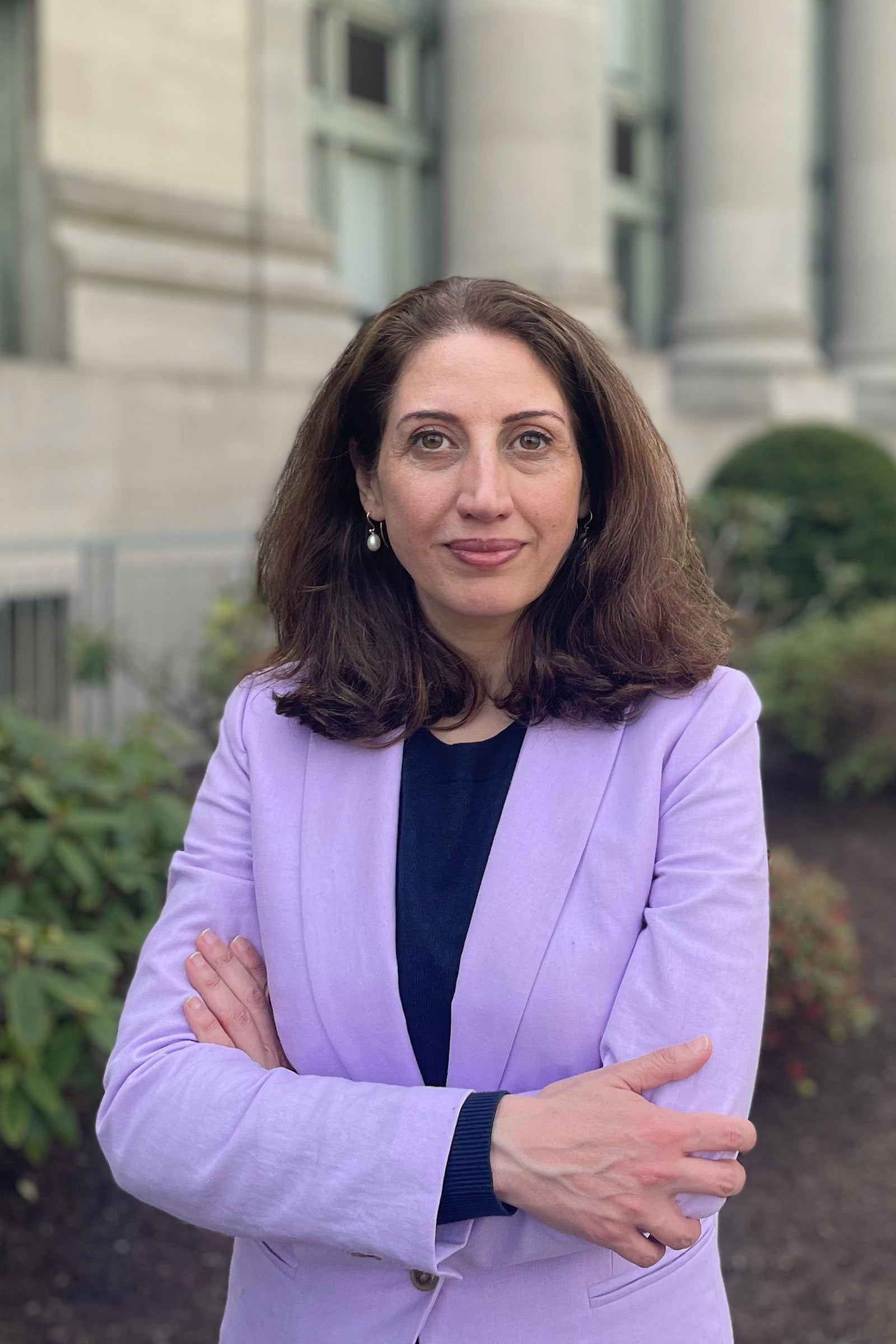
Credit: Eden Sayed
Harvard Law Today: Could you inform us a bit concerning the historical past of human rights lawyering in Iran?
Afrooz Maghzi: Human rights lawyering in Iran has traditionally targeted on representing dissidents in courts, partaking in social and political actions, and advocating internationally. This custom traces again to the 1911 First Charter of Attorneyship, which marked the genesis of Iranian attorneys utilizing authorized platforms to problem state actions. In the collective reminiscence of Iranians, the 1954 trial of deposed Prime Minister Mohammad Mossadegh and his lawyer symbolize the sacrifice and dedication related to one of these lawyering.
Despite attorneys enduring extreme repression after the 1979 revolution, together with many arrests and the closure of the bar affiliation for 18 years, a resurgence occurred between 1997 and 2009. This interval marked a excessive level for Iranian authorized activism, with girls attorneys on the forefront, spearheading numerous campaigns demanding authorized reforms and the rule of legislation. Moreover, attorneys engaged with civil society sectors, facilitated public training, and contributed to drafting and analyzing legislative payments such because the Child Protection Act in 2002. Even although attorneys confronted important limitations in 2009 following the crackdown on civil society after the Green Movement protests, they remained a essential a part of the Iranian political and social actions, as exemplified by their important activism for the reason that 2022 Mahsa Jina Amini rebellion.
HLT: You talked about that ladies have led a lot of the human rights litigation in Iran. What elements contribute to their management and lively engagement as attorneys?
Maghzi: I consider that Iran’s authorized advocacy has this distinct character that ladies are the main forces, notably compared to different Middle Eastern international locations. This is rooted, in fact, within the important lack of rights Iranian girls suffered after the 1979 revolution, creating a singular context the place they’ve been actively reclaiming their rights since then. Shirin Ebadi, the 2003 Nobel Peace Laureate, is a first-rate instance of this resilience. Dismissed as a decide after the revolution, she took up the combat as a lawyer to problem discriminatory legal guidelines. To that we should always add Iran’s historical past of a 150-year-long girls’s rights motion, the lively function of ladies in society and fashionable political and social actions, in addition to the feminization of the authorized career, the place greater than sixty p.c of legislation college students are girls, and the variety of girls making use of to the Bar Association continues to extend.
Women’s involvement in human rights lawyering in Iran has developed over time. Initially, their efforts centered on advocating for equal rights within the Nineteen Sixties. They step by step expanded their function to litigation towards all types of human rights violations, notably for the reason that Nineties. For instance, the Center for Human Rights Defenders, led by a board that included many ladies attorneys, defended hundreds of political circumstances and introduced dozens of circumstances towards the state, addressing abuses reminiscent of torture and extrajudicial killings. Notably, two of its feminine members later received the Nobel Peace Prize in 2003 and 2023. Additionally, feminist lawyering emerged among the many post-revolution technology, specializing in the impression of Islamic legislation on girls and difficult patriarchal judicial methods. They launched strategic litigation utilizing feminist strategies of lawyering in defending victims of gender-based violence and people present in violation of gender discriminatory legal guidelines. They additionally initiated international campaigns like Stop Stoning Forever, and took part in public consciousness initiatives such because the One Million Signature marketing campaign to repeal discriminatory legal guidelines.
HLT: What about your personal story as a human rights lawyer?
Maghzi: My journey as a human rights lawyer started throughout my undergraduate years once I volunteered with the Association for Children’s Protection. However, the turning level was in 2003, once I related with girls’s rights activists and joined a newly established authorized support group for ladies. There, we supplied professional bono authorized consultancy and illustration to girls, together with these dealing with execution or long-term imprisonment for crimes reminiscent of mariticide, adultery, and intercourse work. Additionally, I actively participated in girls’s rights NGOs and campaigns, together with the One Million Signatures marketing campaign the place we organized workshops throughout a number of cities with native activists to coach folks about discriminatory legal guidelines and methods for mobilization.
However, following the violent suppression of the Green Movement in 2009 and the following mass arrests, I shifted my focus to representing political prisoners and human rights activists in numerous cities. During this time earlier than leaving the county, I defended protesters, journalists, human rights and political activists, in addition to representing the households of those that have been killed by safety forces throughout protests in legal courts. However, if I have been to categorise my positionality, it could be that my background in feminist lawyering had deeply influenced my strategy and authorized strategies in different areas of labor, starting from political circumstances to on a regular basis authorized issues.
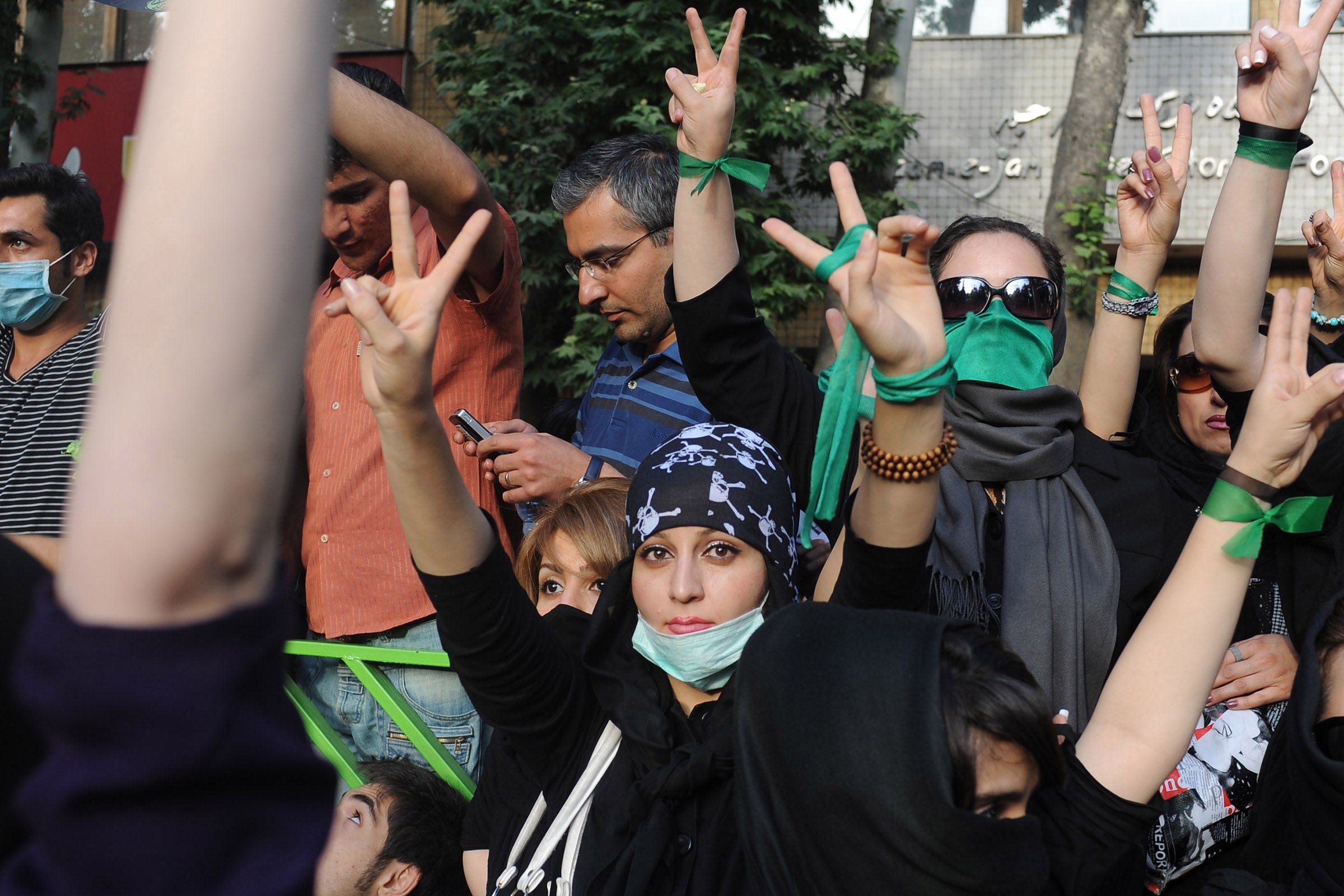
Demonstrators protest in entrance of a state tv station in Tehran, Iran in 2009. Credit: Kaveh Kazemi/Getty Images
HLT: What are the obstacles to human rights lawyering in Iran?
Maghzi: We see that the state has constantly sought to restrict human rights attorneys’ affect by means of numerous means. The attorneys face the fixed menace of arrest, long-term imprisonment, surveillance, and the potential lack of their lawyer licenses. In addition, the state tries to restrict their affect by means of legal guidelines limiting human rights attorneys’ engagement in political circumstances. For occasion, in 2015, an modification to the Code of Criminal Procedure required people dealing with “nationwide safety” costs to pick their lawyer from a judiciary-approved checklist throughout preliminary investigations. Additionally, over the previous 4 a long time, many laws have been launched to undermine bar associations’ independence. In the newest growth, parliament handed a legislation in September 2023 that, as soon as ratified by the Guardian Council, will grant the Ministry of Economy management over issuing and revoking attorneys’ licenses, marking essentially the most severe assault on bar associations’ independence.
Women and minority attorneys additionally face extra challenges. Just specializing in girls attorneys, which is my present analysis on the Program on Law and Society within the Muslim World, we see how obligatory hijab, as an example, is used to humiliate and degrade girls in courts and additional stress them. In reality, feminine attorneys, together with myself, have many experiences with males inside court docket buildings, from guards to judges, reprimanding us for supposedly not sporting hijab correctly. Human rights lawyer Nasrin Sotoudeh was not solely sentenced to 30 years in jail for her activism, however she additionally acquired an extra six months for not sporting the hijab throughout an interview with overseas media. Women human rights attorneys additionally regularly face stress and threats directed at their members of the family as a type of intimidation. In Nasrin Sotoudeh’s case, her daughter acquired a number of journey bans forbidding her from leaving the nation even on the age of 11. Similarly, Shirin Ebadi’s husband was coerced into giving an incredibly weird interview on state TV, the place he portrayed her as a violent girl who had abused him all through their marriage.
HLT: What is the present state of human rights lawyering in Iran, particularly within the aftermath of the latest wave of protests in 2022?
Maghzi: Due to elevated state suppression since 2009, authorized activism in Iran has targeted primarily on representing political circumstances, with restricted alternatives for different litigation campaigns. However, there are circumstances the place authorized activism surpasses earlier litigation campaigns for authorized reform, as a substitute difficult the state extra radically, reminiscent of suing the supreme chief for mishandling the coronavirus pandemic in 2022. While all attorneys and activists concerned on this case have been arrested and imprisoned even earlier than submitting their complaints, this motion marks a brand new period in authorized advocacy in Iran.
Lawyers have emerged as necessary actors, each through the 2022 rebellion and in sustaining the revolutionary spirit for the reason that crackdown on protesters. During the rebellion, over 100 attorneys have been arrested, many summoned to intelligence service workplaces and 4, together with three girls, tragically misplaced their lives. On the primary day of the protests, quite a few attorneys took to social media, providing free authorized illustration to these detained by the state. Lawyers additionally organized protests in entrance of bar associations in numerous cities, demanding an finish to state violence, solely to be attacked by safety forces. One fascinating side is that in contrast to previously, the place solely attorneys from main cities have been concerned in political circumstances, this time attorneys from all cities supplied authorized illustration to protesters. Currently, we see their necessary function in protesters’ trials, notably for these dealing with the loss of life penalty. Despite the state’s efforts to manage trials by appointing attorneys near the intelligence service, human rights attorneys have managed to take part in some circumstances. Their involvement revealed the sham nature of the trials and the brutal torture suffered by the defendants, even when they couldn’t all the time forestall executions, like that of Mohammad Ghobadlou in 2024.
In this context, social media has grow to be a transformative device for attorneys to share details about their shoppers’ conditions, mobilize help, and problem the state’s violations of fundamental rights.
HLT: What do you suppose the long run holds for human rights attorneys in Iran?
“Despite 4 a long time of extreme suppression of attorneys and assaults on the independence of the bar affiliation, the state has been unable to silence human rights attorneys or forestall the emergence of a brand new technology of authorized advocates.”
HLT: What function have nongovernmental organizations (NGOs) and the diaspora performed in supporting this work?
HLT: Tell us extra about your fellowship at Harvard Law School’s Program on Law and Society within the Muslim World. What are you engaged on?
Maghzi: Currently as a part of my HLS fellowship, I’m learning the essential function of ladies in human rights lawyering in Iran, exploring their historic contributions, numerous actions, motivations, and challenges. This investigation types a part of a wider examination of human rights advocacy in Iran, addressing a notable hole in current literature. In this analysis, I goal to investigate the distinctive dynamics of authorized advocacy in Iran, which, regardless of working inside a theocratic, male-dominated framework, is sustained by elements reminiscent of a wealthy historical past of pro-democracy and human rights actions, alongside a youthful, educated inhabitants striving for democracy. Beyond its educational worth, this analysis has sensible implications, aiding stakeholders concerned in Iranian authorized advocacy, domestically and internationally, in navigating related dangers and obstacles. Additionally, I search to foster connections throughout generations of Iranian human rights attorneys, aiming to bridge the hole exacerbated by state suppression.
My curiosity on this matter derives from my expertise as a human rights lawyer in Iran, which pressured me to grapple with the struggles of people within the face of state violence or systemic oppression. This was an extremely humbling, formative, and eye-opening expertise which I think about essentially the most invaluable time in my life. Later on, I gained additional perception into this topic from completely different views by means of collaborations with worldwide NGOs in addition to UN and EU businesses, such because the Office of the High Commissioner for Human Rights and European Union Agency for Asylum. While I used to be all the time fascinated by the complexity of authorized advocacy in Iran, it was throughout my Ph.D. coaching on the Max Planck Institute for Social Anthropology in Germany that I discovered the conceptual and methodological instruments vital to review this phenomenon. This matter is, subsequently, very near my coronary heart, embodying my private {and professional} journey, and I’m grateful to the Program on Law and Society within the Muslim World for offering me with the chance to discover it additional.