

A runoff election will likely be held on July 5 after a fiercely contested first spherical of Iran’s presidential election wherein no candidate obtained the required 50 p.c of the vote, Mohsen Eslami, spokesman for Iran’s election fee, mentioned on Saturday.
According to the outcomes, Massoud Pezeshkian, a reformist and former Iranian well being minister, gained greater than 42% of the vote, whereas Saeed Jalili, a fundamentalist and former chief negotiator in Iran’s nuclear talks with world powers, gained greater than 38% of the whole.
According to the Iranian structure, the candidate who receives an absolute majority of fifty p.c or extra within the first spherical of the presidential election wins. If no candidate reaches that threshold within the first spherical, a runoff election will likely be held on the Friday following the election, between the 2 candidates with probably the most votes.
Regardless of who wins the upcoming runoff elections, analysts consider key focuses for Iran’s subsequent president will likely be navigating financial challenges posed by Western sanctions, coping with rising tensions with Israel and strengthening ties with neighboring international locations.
Low voter turnout
Voting within the election was prolonged thrice, or by six hours, from its scheduled finish and lasted for 16 hours, closing at 12:00 a.m. native time on Saturday (20:30 GMT on Friday).
Tens of thousands and thousands of Iranians voted at round 59,000 polling stations throughout greater than 95 provinces.
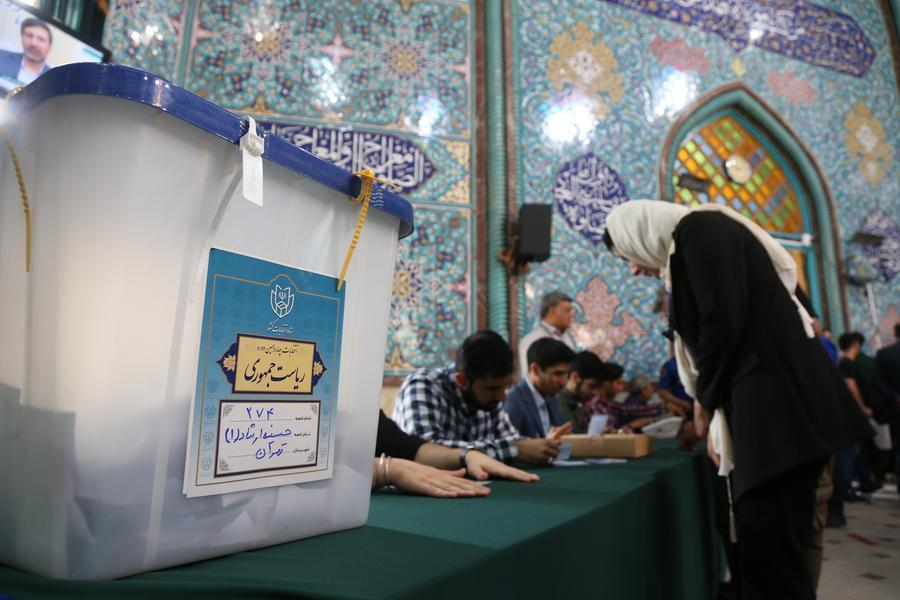
People vote at a polling station in the course of the Iranian presidential elections in Tehran, Iran, June 28, 2024. (Xinhua/Shadati)
The Iranian authorities has made voter turnout a precedence within the run-up to the election, actively selling voter participation, which Iran’s Supreme Leader Ali Khamenei has mentioned is “important for the survival of the Islamic Republic’s regime.”
“The Islamic Republic’s permanence, coherence, dignity and status on this planet rely on its folks,” he mentioned after the primary spherical of voting on Friday.
A complete of 80 political heavyweights have registered to participate within the election. Iran’s Guardian Council accredited the entry of six candidates into the election earlier this month.
With present Vice President Amir Hossein Ghazizadeh Hashemi and Tehran Mayor Alireza Zakhani asserting their withdrawal simply days earlier than the inauguration, the 4 candidates who finally emerged as finalists for Iran’s prime govt job have been Parliament Speaker Mohammad Bagher Qalibaf, former Interior and Justice Minister Mostafa Pourmohammadi, Jalili and Pezeshkian.
Besides Pezeshkian and Jalili, Qalibah obtained 13.8% of the vote and Pourmohammadi 0.8%, in keeping with the Iranian Election Headquarters.
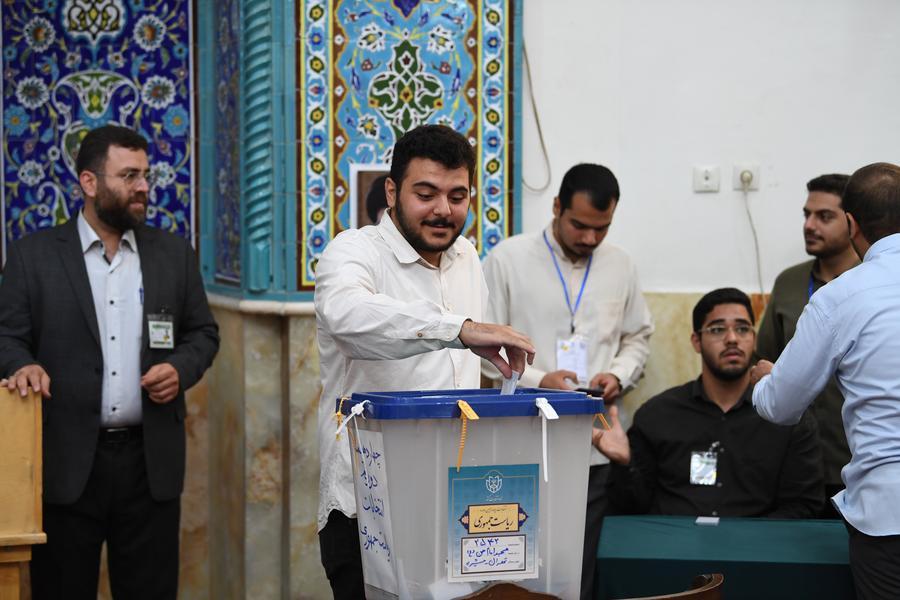
A voter casts his poll in Iran’s presidential election at a polling station in Tehran, Iran, June 28, 2024. (Xinhua/Shadati)
Reformists vs. Fundamentalists
Iran’s 14th presidential elections have been initially scheduled for 2025 however have been introduced ahead following the surprising deaths of President Ebrahim Raisi and his entourage in a helicopter crash on May 19.
During the election marketing campaign, the candidates additionally pledged to comply with within the footsteps of the late President Raisi, however deep variations stay between Mr Pezechkian and Mr Jalili over points equivalent to relations with the West and easy methods to sort out the nation’s financial issues.
Pezeshkian, 70, served as Iran’s well being minister from 2001 to 2005 and beforehand labored as a cardiac surgeon.
During the election debates, Pezechkian advocated for financial reform and larger social freedom and inclusiveness. He acknowledged his intention to attain nationwide financial progress by way of strengthening ties with the area and the world.
“We need to resolve our issues with the world, we’ve to resolve our issues with the nuclear settlement,” Pezechkian mentioned in the course of the last debate on Tuesday.
Jalili, 59, ran as a certified candidate within the presidential elections in 2013 and 2021. In 2021, he withdrew his candidacy in assist of Raisi.
Jalili has taken a extra conservative and hardline stance on associated points. During the talk, he criticized the United States for exerting “most stress” on Iran and mentioned he wouldn’t search improved ties with the West.
“We should make our enemies remorse the sanctions towards Iran by way of financial means,” Jalili mentioned within the last debate, arguing for stronger financial ties with Latin American and African international locations to ease U.S.-led sanctions towards Iran.
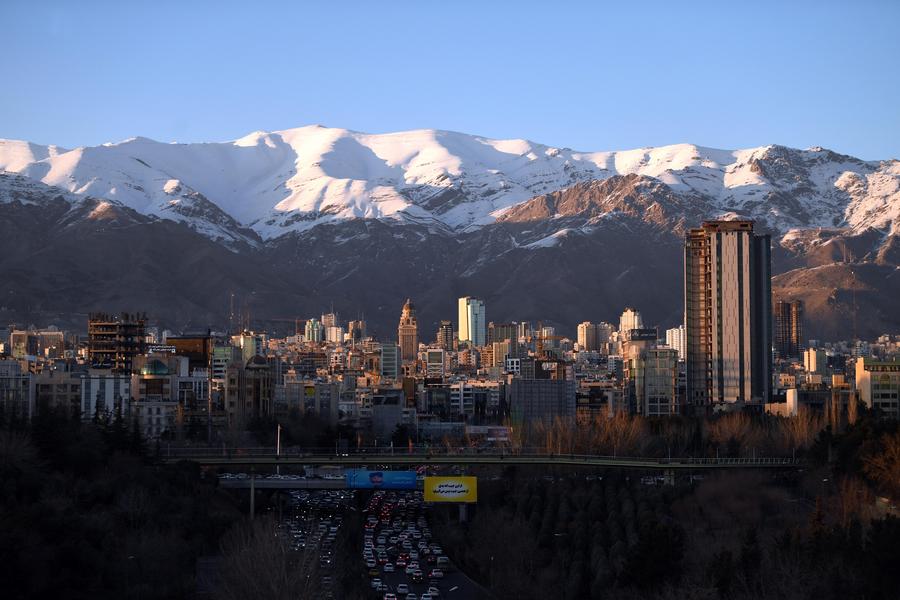
A snowy mountain seen from Tehran, Iran, on March 9, 2024. (Xinhua/Shadati)
The approach ahead
While most consultants agree that there’ll possible not be any main modifications in Iran’s political course, Iranians nonetheless count on the subsequent president to implement efficient options to handle the nation’s severe financial challenges and navigate rising tensions with Israel and the West.
“The most important home concern will likely be associated to the financial system,” mentioned Mostafa Hoshcheshm, a Tehran-based worldwide affairs analyst.
A latest International Monetary Fund report revealed the dire financial scenario in Iran, with home inflation hovering to 35 p.c and unemployment reaching 8.9 p.c. The most important concern of Iranians now’s easy methods to improve exports, curb inflation, and create extra employment alternatives.
Iran’s present financial difficulties are primarily because of US and Western sanctions, and each Pezeshkian and Jalili have been clear of their need to hunt the lifting of US sanctions towards Iran.
However, consultants argue that given the numerous variations between Iran and the United States over reviving the Iran nuclear deal and present tensions between Iran and Israel, there may be little prospect of an enchancment in relations between Iran and the West within the quick time period.
Iran’s future diplomatic focus is subsequently more likely to be on strengthening its ties with international locations within the international south and the neighboring area.
“The most essential agenda for the subsequent Iranian administration to pursue will likely be to benefit from its membership within the Shanghai Cooperation Organisation and BRICS, regional geopolitics and overseas coverage alternatives by way of larger engagement with neighboring international locations,” mentioned Saeed Reza Sadr Al Hosseini, a Tehran-based senior regional affairs knowledgeable.
“As the (Supreme) Leader (Ali Khamenei) confused, Iran’s strategy will stay eastward-oriented, regardless of who turns into president,” Khoshcheshm mentioned.